









Sportspeople in all disciplines benefit from a carbohydrate-rich diet at all times and in all phases, because energy is obtained primarily, initially and most effectively from carbohydrates.
Depending on the muscular mass, the body can store approx. 400-500 g of carbohydrates in the form of glycogen in its carbohydrate reserves (glycogen deposits). During intensive phases of training, this makes it important to start out well prepared with full reserves of glycogen. However, storage capacities in the muscles and liver are limited. For activity lasting more than one hour (training or competition), sportsmen therefore have to rely on a regular intake of carbohydrate.
Amount of carbohydrate intake
For each hour of sport, you should plan for approx. 1.2 g of carbohydrate per kg of body weight. For an athlete weighting 60 (80) kg, this corresponds to approx. 72 (96) g per hour.
The maximum absorption rate for pure glucose is about 1 g per hour, because no more than this amount can be absorbed from the intestine. More recent studies have nevertheless shown that a glucose-fructose mixture (proportions of 2:1) can increase carbohydrate combustion by 20-55%. As a result, more energy is available to the body, which enhances performance, especially in endurance sports (Jetjens et al., "High Oxidation Rates from Combined Carbohydrates Ingested during Exercise", Med. Sci. Sports Ex., Vol 36, No. 9, pp.1551- 1558, 2004).
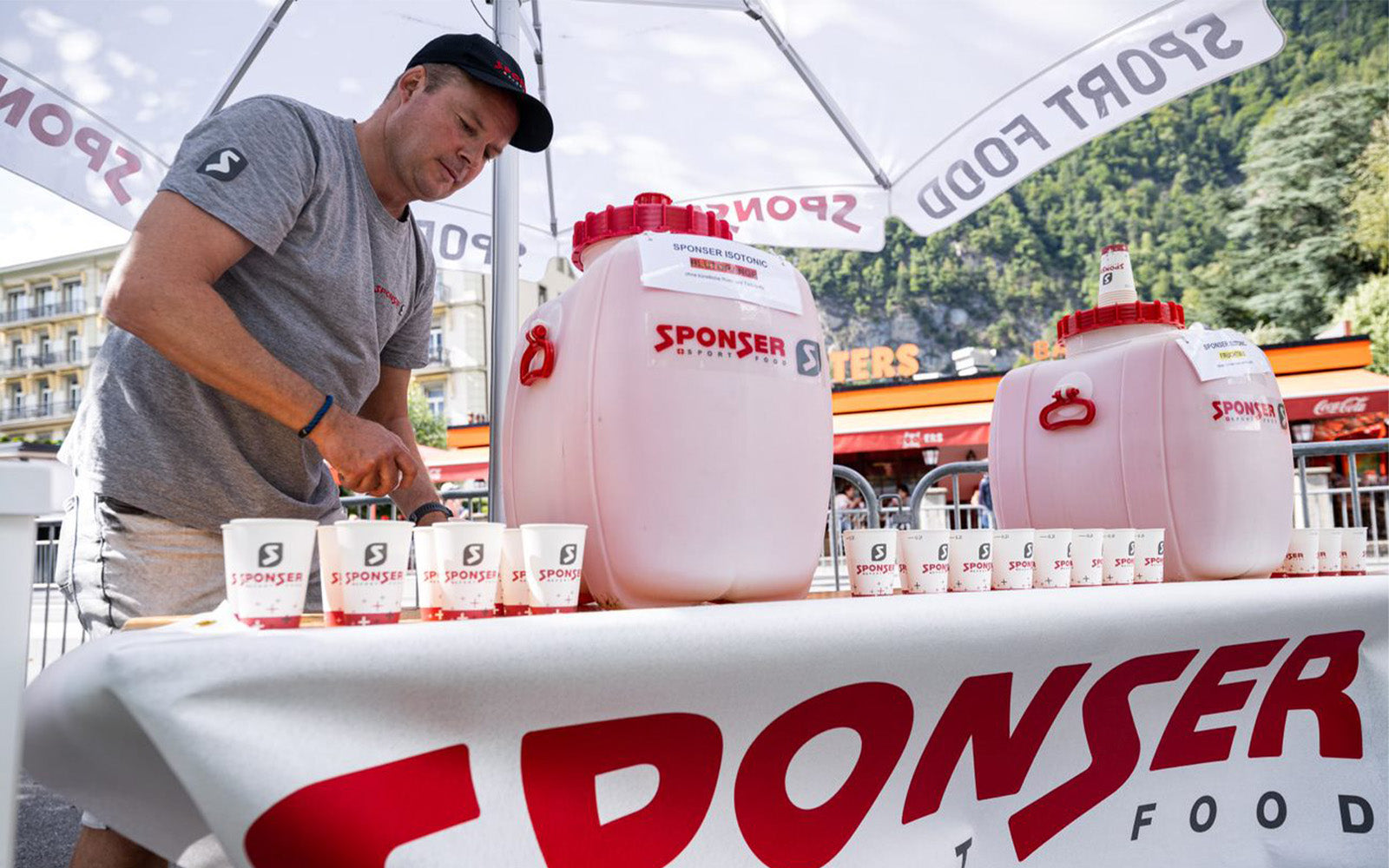
Sponser products (Isotonic, Competition and Liquid Energy) have always featured an appropriate proportion of carbohydrates.
Carboloading
Targeted carboloading prior to a competition makes larger reserves of energy available to the body, so it remains able to perform for longer periods. Costly and complex diets used to be recommended to 'load' carbohydrates (a process also known as tapering or carboloading). In practice, however, these strict methods were often applied in very unsatisfactory ways, so simpler, less complex approaches have gradually become established in scientific theory and practice nowadays.
More recent studies show that targeted 1-day carboloading before a competition is very efficient and useful. The focus here is on a diet that is extremely rich in carbohydrates. Carbohydrate drinks specifically developed for this purpose, which are usually felt to be very pleasant to consume, can also be helpful and can play a part in significantly reducing stress on the stomach. They are usually taken one day before the competition, divided into four or five portions.
In classical carboloading, a strictly protein-fat diet is maintained during the first two or three days. Carbohydrates are no longer consumed. This causes "starving out" of the body. This strict and very severe form of nutrition nevertheless puts very heavy pressure on the athlete's metabolism and often diminishes physical and mental wellbeing.
The alternation between protein-fat days and carbohydrate days can also lead to gastro-intestinal disorders.
Extensive knowledge about nutrition is required for successful carboloading according to the classical method.
Acceptance of such a strict diet is often insufficient; so many athletes also perform the carboloading in an inaccurate manner.
Competitions lasting several days and high-intensity training camps exhaust the reserves of glycogen. Constant topping-up is therefore important, especially in rest phases when stress on the stomach is low. This is why we recommend one portion of Carbo Loader every evening before resting in bed, in addition to taking the usual regeneration products. The night phase should therefore be utilized to maintain performance ability.
![]() | CARBO LOADER A drink that was specifically developed for carboloading. Taken in 4 portions, one day before the competition. |
Which carbs on which time
The "Glycemic Index" offers some guidance here. The Glycemic Index (GI) measures how a food that contains carbohydrates will affect the blood sugar level. The reference value used is the area below the blood sugar curve (blood sugar content plotted over time) after consuming 50 g of pure glucose (corresponding to a GI of 100).
The more food fibers, proteins and fat a food contains in addition to the carbohydrates, the more slowly the blood sugar will rise (lower GI, usually <70). This leads to staggered and delayed release of energy to the body from a food. Foods of this sort form the basis before starting on long days of training. But be careful! Not all products with a low Glycemic Index are suitable for preparing for long training days. Chocolate, for instance, has a relatively low GI (because the high proportion of fat initially prevents absorption of the carbohydrates (sugar) into the blood) but as is well known, it is not a good food for sportspeople. Products with a low GI but a fat content that is not too high should therefore be chosen.
However, it is also important to ensure that the stress on the stomach due to the high proportion of nutrients is kept as low as possible. Power Porridge provides a practical basis. Beta-glucans from oats delay the release of energy and have a sustained filling effect.
On the other hand, if you go into an energy crisis during training or competition, rapidly available carbohydrates with a high Glycemic Index (usually > 70, e.g. glucose or food purely containing starch) must be supplied to your body immediately.
Carbohydrate gels such as Liquid Energy are very well tolerated and will help you to overcome the energy crisis.
Supplements
| NEW-Red Power Gums - taste good and wake up! The energy gums from Sponser contain 150 mg caffeine and 58 g carbs and are a guarantor for better performance in sports. more |
| New - Recovery Drink Vanilla - SPONSER just added a vanilla flavoured version of its RECOVERY DRINK. more |
| Weight Plus / Recovery Shake - Improved formulation and additional flavour! more |